
Enterprise clients were taking 2–3 weeks to go live, delaying value and increasing support load. After several onboarding cycles, three key issues surfaced:
Unclear structure during calls: e-commerce assistants had no standard action plan or script.
Scattered information: client details were spread across emails, Notion pages, and chat threads.
No visibility: leadership couldn’t see onboarding status or where clients were getting stuck. Without visibility, each onboarding felt like reinventing the wheel. Clients had questions, CSMs had no consistent reference, and leadership had no data to improve.
Turn a 3-week process into a repeatable 5-day framework that ensures: a clear, guided experience for clients, predictable progress tracking for the team, and visibility into onboarding status and time-to-value.
We tackled the challenge in three key fronts: Process, Tooling, and Visibility.
I started by mapping every step of onboarding, from kickoff to go-live. With input from CSMs, Sales, and PMs, we built a day-by-day plan that set expectations and ownership across teams.
We introduced a Pre-Onboarding Intake Form, sent before kickoff, to collect critical data early:
This form ensured that by Day 1, both the client and CSM team were aligned and ready.
We needed something fast, not perfect.
Using Figma’s AI features (Figma Make), I built a “quick and dirty” onboarding tool that:
Once onboarding became structured, we needed a way to track it.
I designed an Admin Onboarding Dashboard to monitor:
The dashboard turned anecdotal delays into measurable insights. We could now identify blockers, assign owners, and continuously improve.
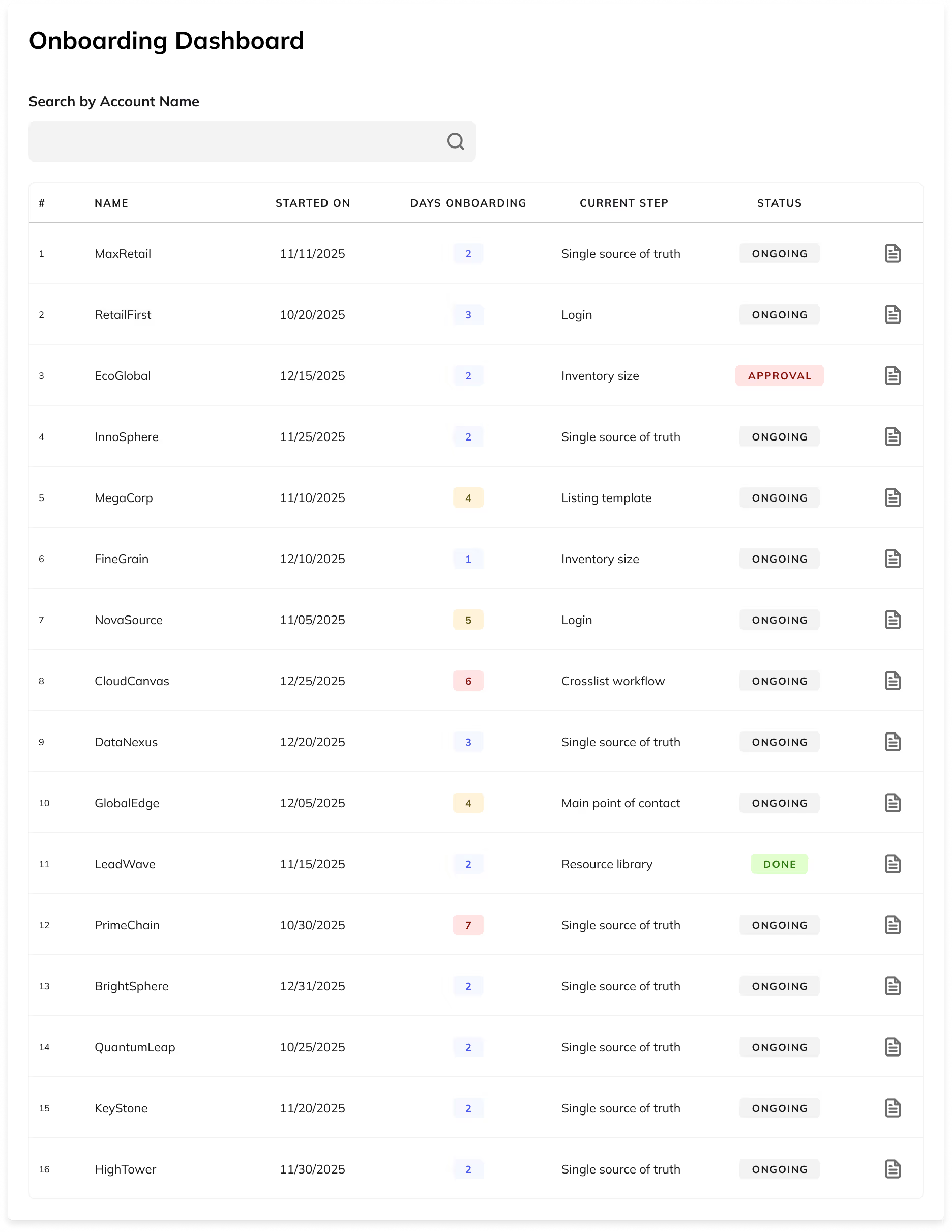
Screenshot of the onboarding dashboard initial view.
After the rollout:
Enterprise onboarding doesn’t have to be slow. With the right structure, automation, and visibility, we turned a chaotic process into a predictable, 5-day journey that scales.
How We Achieved a 2X Conversion Boost

Revolutionizing Item Creation to Deliver Value Sooner
How a Unified System Boosted Consistency and Speed
Finding Insights Across Major Features